GLOBALVARS
0
This is an edition of Heatmap Daily, an evening review of the day’s news written by our executive editor. Sign up for it here.
We’re in the last third of 2026. In yesterday’s newsletter, I looked at the biggest planned upcoming events in climate and energy policy that we’re tracking at Heatmap for the rest of this year.
Today, I want to look at some of the biggest questions that I’m pondering for the rest of the year.
What will the AI backlash mean for data centers and energy demand?
In just the past 24 hours, existential concerns about artificial intelligence has gone mainstream. Even though AI engineers have warned that the technology could trigger some kind of mass fatality event — or even human extinction — for years, the resignation of Sam Coxon from Anthropic seems to have broken through into a new tier of public awareness. “We really do earnestly believe AI could kill all humans! I personally think it is >10% within the next decade,” Evan Hubinger, an Anthropic employee, posted on X after Coxon’s resignation broke.
It’s unscientific, but I’ve seen more celebrity Instagram posts, vertical videos, and concerned messages from friends about AI doom in the past day than I have in weeks. Senator Bernie Sanders is now holding a bipartisan meeting next week to discuss the “extraordinary dangers” posed by AI, according to Axios.
We already know that the public detests AI data centers. But so far the data center story has been somewhat severable from the AI story — voters, politicians, and journalists could talk about the AI infrastructure buildout separately from the tales of, say, AI allegedly solving century-old math problems. Will that remain the case? Or will the two stories merge? If that happens, will politicians and AI safety experts start to encourage (or even empower) the data center backlash because it might slow down AI’s overall development? What will that mean for the politics of infrastructure, electrification, and load growth — and will it cut greenhouse gas emissions?
What will happen in Iran, how high can oil go, and what will it mean for the energy system?
President Donald Trump has never been “looking for long term” in Iran, yet his war continues to drag on without an obvious or easy resolution. It has dragged energy prices up with it.
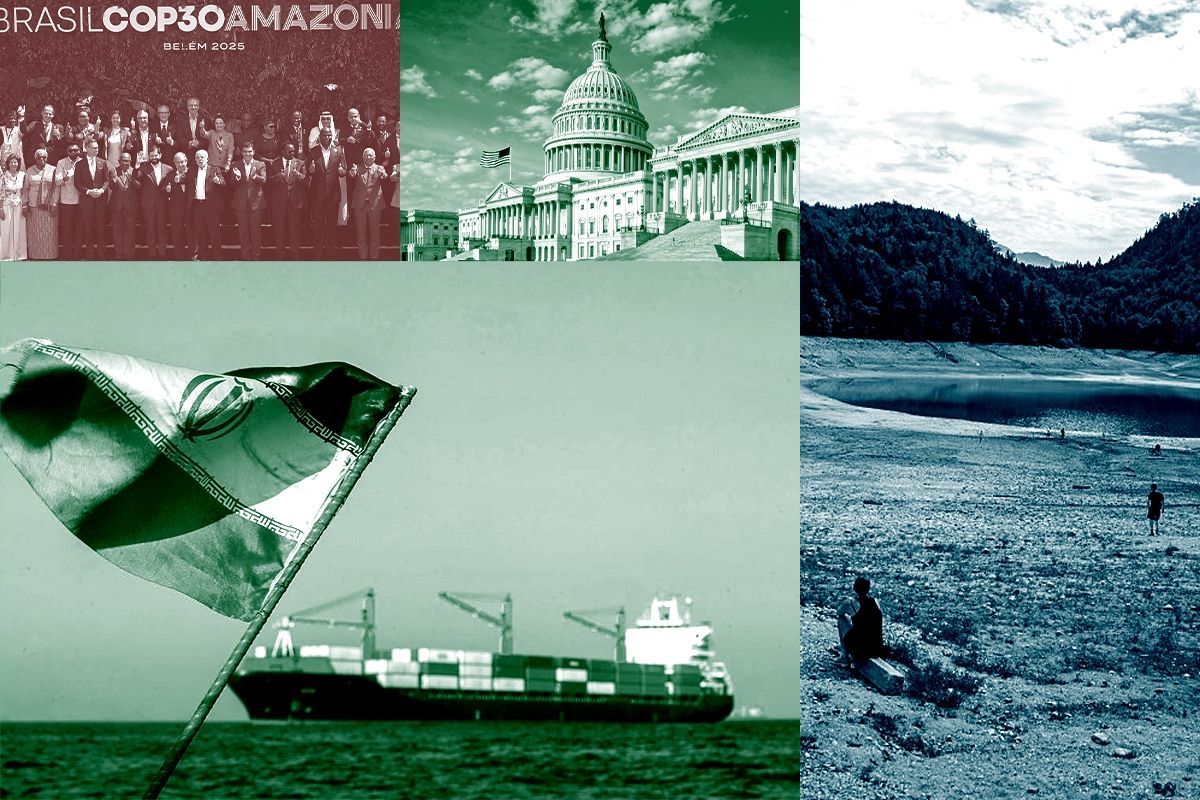
The global crude benchmark has now edged above $100. Gasoline costs more than $4.20 a gallon on average in the United States (and far more in Europe), and diesel is even more expensive. According to an ongoing estimate from Brown University researchers, the war has now cost Americans more than $100 billion due to energy inflation since it began. Hostilities have seemed to intensify in the past few days; Iran fired missiles at U.S. Navy ships and the United States responded by destroying oil tankers.
This has been generally bad for European economies, which are to some degree still recovering from the triple shock of Covid, energy inflation from Russia’s invasion of Ukraine, and China’s ongoing export boom. At the same time, the Iran war has broadly vindicated China’s energy strategy, which has used electrified technology, strategic stockpiling, and a coal, solar, and battery-dependent power grid to reduce economic dependence on seaborne liquid fuels. (China’s greenhouse gas emissions actually fell in the second quarter because of a drop in the country’s oil consumption.)
The most urgent question here, of course, is whether President Trump will find a way to end the war that he began earlier this year — and how expensive oil and liquified natural gas will get in the interim.
But an end to the war will trigger another set of questions about what this energy shock will mean for energy, climate, and industrial policy going forward. Shocks like these tend to dominate national strategy for years or decades after they happen; Thailand’s government announced last month that it’s backing off LNG imports in favor of renewables. Will we start to see a wider set of countries do the same? Will more countries build strategic oil stockpiles, driving up oil demand in the short term? And will more middle- and low-income countries embrace Chinese-made electric cars in the name of boosting energy security and cutting their oil dependence?
Will the U.S. get bipartisan permitting reform?
The most important political question this year — if you are a normal person — is whether Democrats will take over the House of Representatives and even the Senate in the upcoming midterm election. But we aren’t normal people here at Heatmap. And the midterm elections will, for us, only commence the year’s most interesting political moment.
Right now, lawmakers from both parties say they are trying to reach a deal on bipartisan permitting reform. Such a bill would make it easier to build transmission lines, renewable energy, and some fossil fuel infrastructure, as well as presumably restraining the president’s extralegal war on solar and wind. It could even make it easier for the government to build public infrastructure of all sorts.
We haven’t seen the text of such a deal yet — although my Shift Key interview with Daniel Palken, a permitting expert at Arnold Ventures, offers a lot of clues to its potential content. So it remains an open question whether lawmakers can reach a deal in November and shepherd it through a lame-duck Congress before the end of the year.
If they can, it could enable a future president to conduct a faster and more aggressive clean energy or infrastructure buildout than was previously imaginable. If they can’t, then it will be hard to imagine when such a deal might ever come together, as it has failed to congeal under almost every partisan combination of a president and Congress.
Will 2026 be the hottest year ever?
Back in the spring, climate scientists assigned low odds to the probability that 2026 would become the hottest year ever measured. Since then, though, a monstrous El Niño has clawed out of the Pacific Ocean, nudging up global temperatures and contributing to America’s record-breaking summer.
2026 now has a greater than 33% chance of eclipsing 2024’s hottest-year-on-record title, according to a late July estimate from Carbon Brief; the odds have probably risen further since then. Either way, 2026 will probably come in about 1.5 degrees Celsius warmer than the pre-industrial average — and 2027 is very likely to be even hotter.
Are we entering a post-Trump, post-2010s energy and climate era — and what will it look like?
President Donald Trump is about as unpopular as he has ever been, and on a range of issues, he seems to be losing touch with the American public. Simply by dint of being the country’s most prominent political figure for most of the past 10 years, he has become an establishment politician. He now champions AI, data centers, and the Iran War, for instance, while Americans seem skeptical of all three (at best).
In the next several months, these trends are all likely to intensify: Trump is likely to lose control of Congress — at least according to the polls and the betting markets — and a new presidential election will begin, one in which he will probably not be running.
Which isn’t to say that Trump will lose his grip on the Republican Party or its voters — nor that his actions in the coming years will be lawful, or even Constitutional. But nevertheless if you squint, you can begin to imagine what a post-Trump political era might look like, and it is quite different from the epoch that we have just lived through. It is an era where voters will likely be more worried about inflation and the cost of living than unemployment and economic growth. It is an era where Democrats will be looking to play up economic populism and where the federal deficit might matter again. It is an era where Millennials will be in their prime earning years, where politicians will fear a backlash to industrial policy and infrastructure buildout, and where America’s role in the world will remain unsettled.
It is, in short, not at all like the era that gave us the Green New Deal or the other energy and climate policy of the early 2020s; even if a recession hits and employment becomes a major concern once again, then the resulting political environment might look more like 1992 (or even 1937) than 2008. We are, in short, entering a new era — one we’re excited to watch, develop, and cover here at Heatmap.