GLOBALVARS
0
California’s continued progress on climate change may depend on whether the state can find a way to bring down its high electricity rates, which hurt the economics of cleaner technologies like electric vehicles and heat pumps and make climate action more politically difficult.
Ahead of the upcoming governor’s race, the clean energy research firms Energy Innovation and GridLab convened a group of more than 20 local electricity experts to develop a policy roadmap for the state’s next administration to reduce energy costs. They published the findings on Thursday, describing a number of opportunities for policymakers to better manage utility spending and more fairly allocate costs among utilities, residents, and communities.
“There is so much work to be done to correct for and address the underlying forces that have led to consistent rate increases over the last 25 years,” Mike O’Boyle, the senior director for policy and strategy at Energy Innovation, told me. There are also no quick fixes, he added. Instead, the report offers directional solutions rather than specific policy proposals, recognizing that it will take years of sustained leadership to make progress.
By far the most significant force driving California’s high rates, especially over the past decade, is the cost of responding to and preventing catastrophic wildfires. The state Public Advocate’s office recently found that the wildfire-related share of the average customer’s bill is 14% to 19%, or $21 to $41 per month.
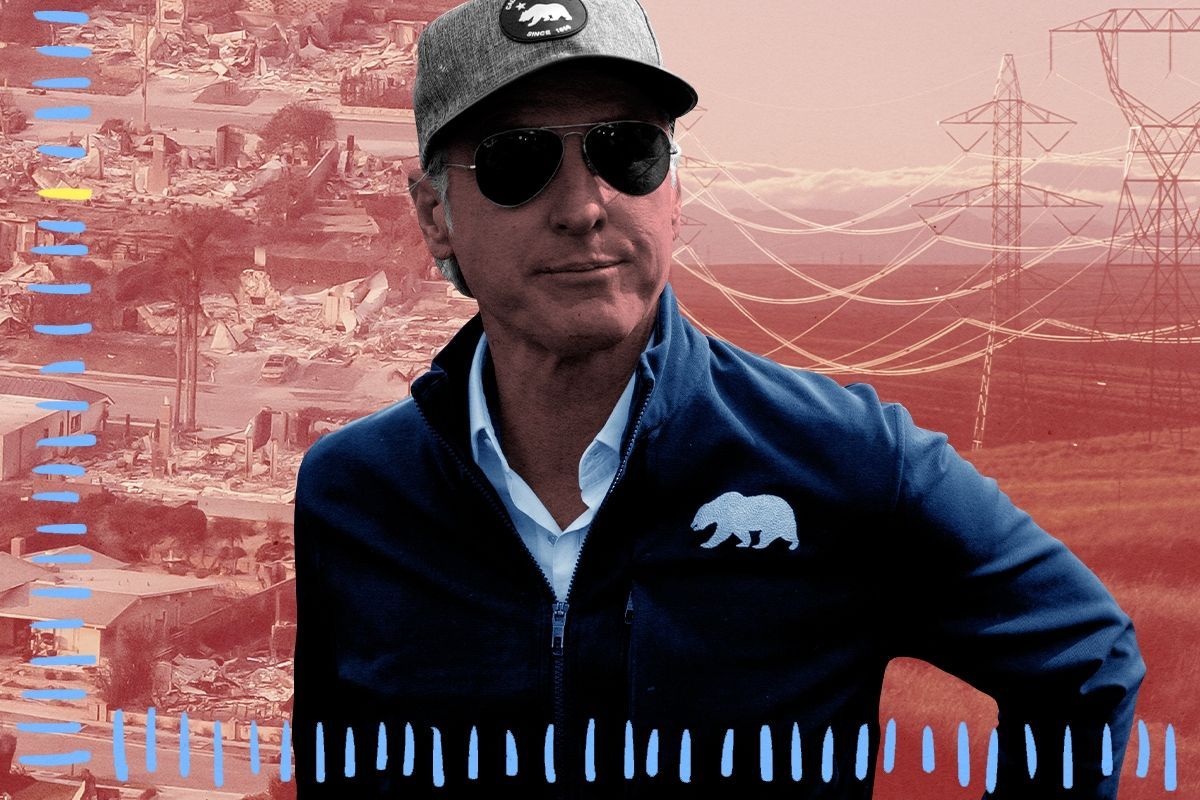
Just before the Labor Day weekend, Governor Gavin Newsom faced a showdown with the legislature over his proposal for how to reallocate wildfire liability. For weeks, Newsom had been pushing lawmakers for a package that would reduce the amount of money utilities would be on the hook for after their equipment sparks a wildfire. One of his priorities was to outlaw subjugation, a mechanism by which insurance companies sue utilities to recover the cost of paying out wildfire claims. Newsom was responding to pleas from utilities warning that their credit would be downgraded unless the state reduced their share of the risk. Lower credit ratings would mean increased borrowing costs and, ultimately, higher electricity rates.
The full details of Newsom’s package were never released to the public, but it saw major pushback from insurance companies and victims groups who framed it as a "utility bailout.” Eventually, with just a few days left on the legislative calendar, the governor and legislature put out a compromise bill. It did nothing on subrogation, but it would have blocked hedge funds from buying up and reaping profits from insurance claims, and blocked bonuses for C-suite utility officers when the company sparks a fire.
Despite the supposed compromise, the bill died on the floor of the Assembly. Speaker Robert Rivas said it “does not yet deliver the relief, accountability or meaningful reform that Californians deserve” and vowed to go back to work to “deliver real results.”
Lawmakers may have been convinced by the market’s quick reaction to the bill. The Monday after it was released, California utility PG&E’s stock dropped 20%, while Edison International, which owns Southern California Edison, saw a drop of 23%. Last Wednesday, after the deal had fallen apart, PG&E announced that it would defer $2 billion in capital spending for the next year. In a pre-recorded video, the company’s CEO Patti Poppe discussed how far the company has come since its 2019 bankruptcy, praising its recent track record of no ignitions and innovative investments in grid modernization, but said it was “unable to fund the continued transformation at our current pace. When risks go up, lenders charge more.”
The issue Newsom was trying to address stems from the fact that California assigns full liability to utilities when their equipment sparks a wildfire, regardless of whether the incident was the result of negligence. That’s only one part of the problem, however. The other is that the state leans heavily on utilities to do the majority of its wildfire prevention work, rather than spreading out the responsibility across a broader array of residents and communities. The liability policy also amplifies the second issue, as it creates a perverse incentive for utilities and their regulators to try to reduce the risk of sparking a fire to as close to zero as possible, no matter the cost.
Electricity ratepayers cover both the liability utilities face after a fire as well as the cost of all of that risk reduction — but they spend far more on the latter. Between 2019 and 2024, utility regulators authorized the state’s three private electric companies to recover $40 billion in wildfire-related costs from its ratepayers. Just a third were liability-related costs, such as insurance premiums and payments into a fund utilities can draw on to cover settlements with victims. The rest was mitigation.
The Energy Innovation and GridLab report puts aside thorny questions about wildfire liability and focuses on addressing this mitigation side of the issue with three overarching recommendations.
First, California needs a better way to evaluate the cost-effectiveness of different types of wildfire mitigation. Part of the issue is that when a utility says it needs to spend $200 million on tree trimming in Lake Tahoe, for example, regulators don’t have the tools to assess whether there’s a more cost effective alternative. Maybe $100 million on tree trimming with another $20 million for other kinds of community hardening would provide the same amount of risk reduction.
Second, the state could better leverage public finance, for example by expanding the use of ratepayer-backed bonds to pay for wildfire mitigation. California started down this path in a big utility package passed last year, authorizing utilities to borrow $6 billion from ratepayers through 2035 — a lower-cost form of finance than investor equity. Utilities are spending $9 billion per year on wildfires, however, so that measure was a drop in the bucket.
Third, the state should more equitably spread the responsibility of mitigating wildfire risks, re-allocating some costs from ratepayers to taxpayers and at-risk communities. Utilities spend $9 billion a year on wildfire-related costs, but the state’s Department of Forestry and Fire Protection’s most recent mitigation budget was just $440 million. “The reality is that the status quo of ratepayers paying for all this is untenable,” O’Boyle said. Utility-led mitigation focuses on preventing ignitions, but it doesn’t address factors unrelated to electric infrastructure that can worsen a blaze, such as overgrown forests, development near wildlands, and brush surrounding homes.
While the fracas around Newsom’s compromise package focused on the liability aspects, the bill would have also taken small steps toward some of these recommendations. It required CalFIRE to develop standards for wildfire risk reporting data and incorporate them into community risk reduction metrics — a move toward better evaluations of the most cost-effective measures.
It also would have required the state’s Natural Resources Agency to create a comprehensive statewide community wildfire preparedness strategy, provide support for counties to develop protection plans that align with the strategy, and base state support on communities’ annual progress updates.
We’ll see if any of that gets salvaged. While the legislative session is officially over, Newsom could still call a special session to get a wildfire bill done this year.