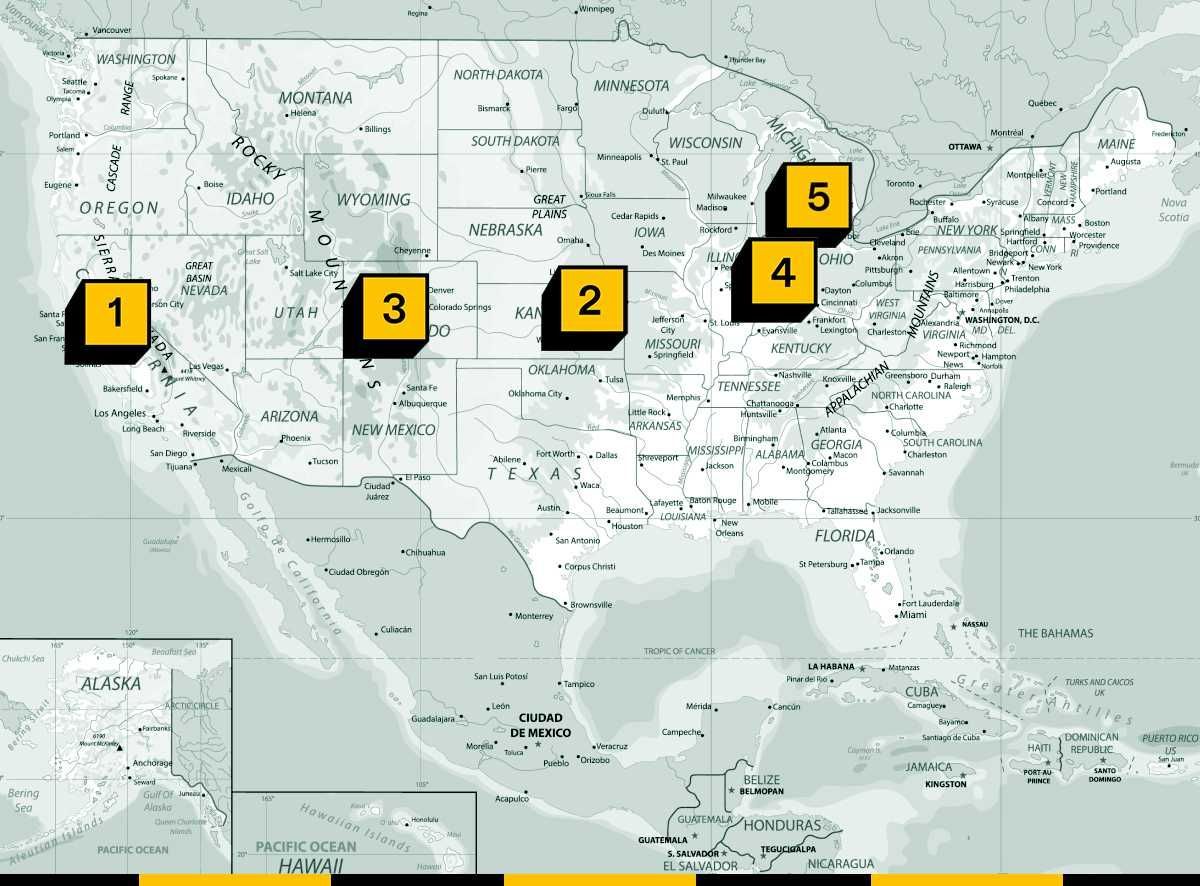
1. Sacramento County, California – A solar project has become a national symbol of the conflicts over large-scale renewables development in forested areas.
- This week the Sacramento County Board of Supervisors unanimously voted to advance the environmental review for D.E. Shaw Renewables’ Coyote Creek agrivoltaics solar and battery project, which would provide 200 megawatts to the regional energy grid in Sacramento County. As we’ve previously explained, this is a part of central California in needs of a significant renewables build-out to meet its decarbonization goals and wean off a reliance on fossil energy.
- But a lot of people seem upset over Coyote Creek. The plan for the project currently includes removing thousands of old growth trees, which environmental groups, members of Native tribes, local activists and even The Sacramento Bee have joined hands to oppose. One illustrious person wore a Lorax costume to a hearing on the project in protest.
- Coyote Creek does represent the quintessential decarb vs. conservation trade-off. D.E. Shaw took at least 1,000 trees off the chopping block in response to the pressure and plans to plant fresh saplings to replace them, but critics have correctly noted that those will potentially take centuries to have the same natural carbon removal capabilities as old growth trees. We’ve seen this kind of story blow up in the solar industry’s face before – do you remember the Fox News scare cycle over Michigan solar and deforestation?
- But there would be a significant cost to any return to the drawing board: Republicans in Congress have, of course, succeeded in accelerating the phase-out of tax credits under the Inflation Reduction Act. Work on Coyote Creek is expected to start next year, in time to potentially still qualify for the IRA clean electricity credit. I suspect this may have contributed to the county’s decision to advance Coyote Creek without a second look.
- I believe Coyote Creek represents a new kind of battlefield for conservation groups seeking to compel renewable energy developers into greater accountability for environmental impacts. Is it a good thing that ancient trees might get cut down to build a clean energy project? Absolutely not. But faced with a belligerent federal government and a shrinking window to qualify for tax credits, companies can’t just restart a project at a new site. Meanwhile, the clock is ticking on decarbonizing the electricity grid. .
2. Sedgwick County, Kansas – I am eyeing this county to see whether a fight over a solar farm turns into a full-blown ban on future projects.
- Mission Clean Energy came to the town of Clearwater, Kansas, trying to do community outreach the right way – early, before the permitting process was fully underway. Mission’s permitting lead Ethan Frazier told local media this week that conversations with landowners adjacent to the project began two years ago. Apparently those neighborly chats didn’t go well, and now Mission is hosting public meetings to try and win support from others.
- Those meetings aren’t great, either, with nearly all attendees landing firmly in the anti-solar camp. Mission’s project will need approvals from Clearwater as well as Sedgwick County that’ll have their own public hearings that could get messy.
- There’s a high risk this fight morphs into not only rejections but restrictive ordinances or outright moratoria and Sedgwick County had a moratorium on solar projects until the spring of last year. And if Mission subscribed to Heatmap Pro, they’d know the risk of opposition against them in this county was almost guaranteed.
3. Montezuma County, Colorado – One southwest Colorado county is loosening restrictions on solar farms.
- In a rare display of pro-solar activism, a pro-solar organization focused on local renewable energy successfully petitioned the county to reconsider its moratorium on utility-scale development, and the county commission this week looked past continued complaints about viewsheds to vote forward regulations allowing new large scale solar permits for the first time in more than six months.
- The pro-solar organization – Montezuma County for Solar – has focused its messaging around a mixture of tax revenue benefits, potential energy cost savings, and ag-solar coexistence. The group also does focus on the environment and climate action, which in Colorado can sometimes actually help with getting support. Coloradans are known to be passionate about recreation and this area is particularly overindexed for sensitivities around its protected lands per Heatmap Pro. That means conservation could be a positive or a negative for development, depending on the circumstances.
4. Putnam County, Indiana – An uproar over solar projects is now leading this county to say no to everything, indefinitely.
- You may recall Putnam County is where an energyRe project was poised to be approved in October until a flood of frustrations at a public hearing led the crucial swing vote on the county commission to vote nay.
- Well, one month later, this county is instituting a moratorium on utility-scale solar and wind – which shouldn’t be a surprise, since it literally couldn’t have a higher risk rating in Heatmap Pro, but is probably a bummer for would-be developers eyeing the area.
- But there’s more: the county is also banning data centers. It’s part of a wider backlash in Indiana over data center development exemplified by Indianapolis’ rejection of a Google complex last month. (And yes, the county is also over-indexed for data center opposition, per Heatmap Pro’s latest model.)
5. Kalamazoo County, Michigan – I’m eyeing yet another potential legal challenge against Michigan’s permitting reform efforts.
- This threat is over battery storage in the town of Oshtemo, right outside Kalamazoo in western Michigan. Yet again neighbors are upset and trying to get the town to block the project, but Michigan’s new primacy law will allow the developer NewEdge to go straight to the state and around local restrictions.
- The town is in “anything is possible” territory at the moment but telling local media this week it is open to litigation, comparing the battery storage facility proposal to previous legal conflicts over transmission lines.