
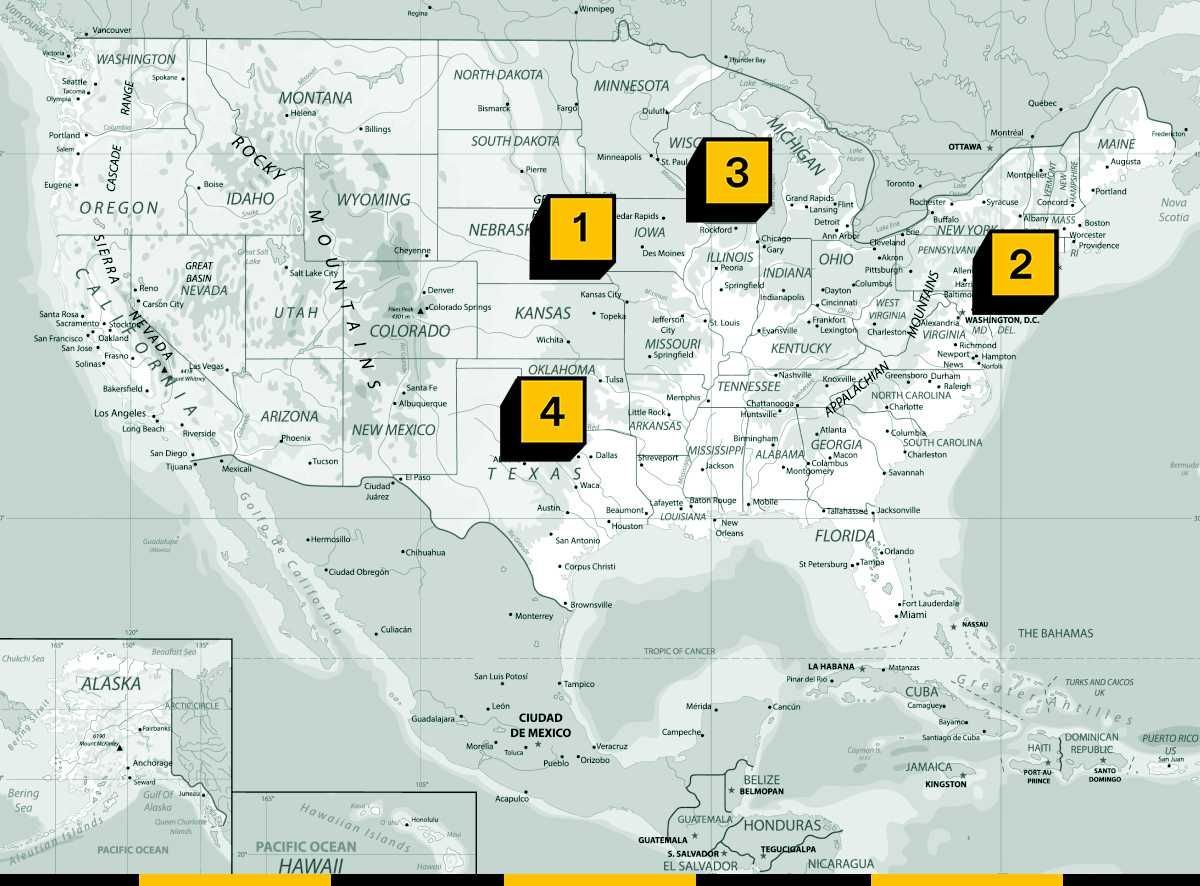
1. Wayne County, Nebraska – The Trump administration fined Orsted during the government shutdown for allegedly killing bald eagles at two of its wind projects, the first indications of financial penalties for energy companies under Trump’s wind industry crackdown.
- On November 3, Fox News published a story claiming it had “reviewed” a notice from the Fish and Wildlife Service showing that it had proposed fining Orsted more than $32,000 for dead bald eagles that were discovered last year at two of its wind projects – the Plum Creek wind farm in Wayne County and the Lincoln Land Wind facility in Morgan County, Illinois.
- Per Fox News, the Service claims Orsted did not have incidental take permits for the two projects but came forward to the agency with the bird carcasses once it became aware of the deaths.
- In an email to me, Orsted confirmed that it received the letter on October 29 – weeks into what became the longest government shutdown in American history.
- This is the first action we’ve seen to date on bird impacts tied to Trump’s wind industry crackdown. If you remember, the administration sent wind developers across the country requests for records on eagle deaths from their turbines. If companies don’t have their “take” permits – i.e. permission to harm birds incidentally through their operations – they may be vulnerable to fines like these.
2. Ocean County, New Jersey – Speaking of wind, I broke news earlier this week that one of the nation’s largest renewable energy projects is now deceased: the Leading Light offshore wind project.
- Proposed to sit off the Jersey coastline, Leading Light would’ve provided enough power to supply a million homes, according to its developers, Invenergy and energyRe. But now it is no more, after legal counsel representing the project developers submitted a letter on Friday to the state’s Board of Public Utilities saying that they no longer see a way to finish construction.
- “The Board is well aware that the offshore wind industry has experienced economic and regulatory conditions that have made the development of new offshore wind projects extremely difficult,” counsel Colleen Foley wrote in the letter, which was reviewed by Heatmap News, adding that it does “not see a pathway forward for the LLW Project.”
- It’s unclear whether Leading Light’s demise was solely because of Trump’s renewables permitting freeze and war on offshore wind. As intrepid Heatmap reader (and contributor) Fred Stafford noted, this project had requested multiple delays before Trump entered office, and was suffering from significant supply chain issues that magnified any pain caused by permit woes. “Each request cited supply chain problems and turbine price volatility given its contract, not federal regulatory barriers,” Stafford wrote on X.
3. Dane County, Wisconsin – The fight over a ginormous data center development out here is turning into perhaps one of the nation’s most important local conflicts over AI and land use.
- Digital infrastructure firm QTS is trying to build what it says will be a $12 billion data center complex here in the village of DeForest, about a half-hour north of Madison as the crow flies. The revolt against the project has been enormous. The opposition Facebook group has almost 2,000 members now and a MoveOn petition has nearly 300 signatures.
- On Wednesday evening, the village of Vienna, adjacent to DeForest, held a meeting on whether to annex more than 1,500 acres of property for the data center in exchange for a $40 million contribution from QTS over 15 years. Residents stormed the meeting opposing the project and got Vienna local leaders to vote unanimously to reject the cooperative agreement for annexation.
- There’s evidence opposition to the data center is part of the broader land use techlash I’ve been chronicling in The Fight. Not only is the primary argument against the project focused on farmland preservation but on the main data center opposition group’s website, its president, Rhonda Meinholz, proudly boasts of having previously killed a large-scale solar project Invenergy proposed in Vienna. “I have concerns about any and all large scale development projects that could impact our environment,” she states on the website. “Farmland is one of Wisconsin’s most precious resources and we need to keep it that way.”
- Dane County has an exceptionally high support score for renewable energy, and even registers a likelihood for supporting data centers in our Heatmap Pro database. But the odds of opposition are just as apparent, and towns across the county currently have ordinances discouraging solar projects on farmland.
4. Hardeman County, Texas – It’s not all bad news today for renewable energy – because it never really is.
- This week Hardeman County approved a tax abatement for an OCI Energy solar project proposed along a farm road in the community. County leaders like the project because it would potentially include millions in funds to the school board and emergency medical services.
- A handful of people – described by local media as “over ten” – spoke at the public meeting on Monday against the project, but county officials shrugged it off. “The abatement will help citizens of the community in a lot of ways, but it is going to hurt one or two citizens,” County Judge Ronald Ingraham told reporters. “[It’s for] we think the greater good of the county and I hate that anybody has to be upset by it or hurt by it.”
- It’s unclear when construction will begin because OCI is first trying to trap a species of rat present at the project site that is listed as threatened under the Endangered Species Act.