0
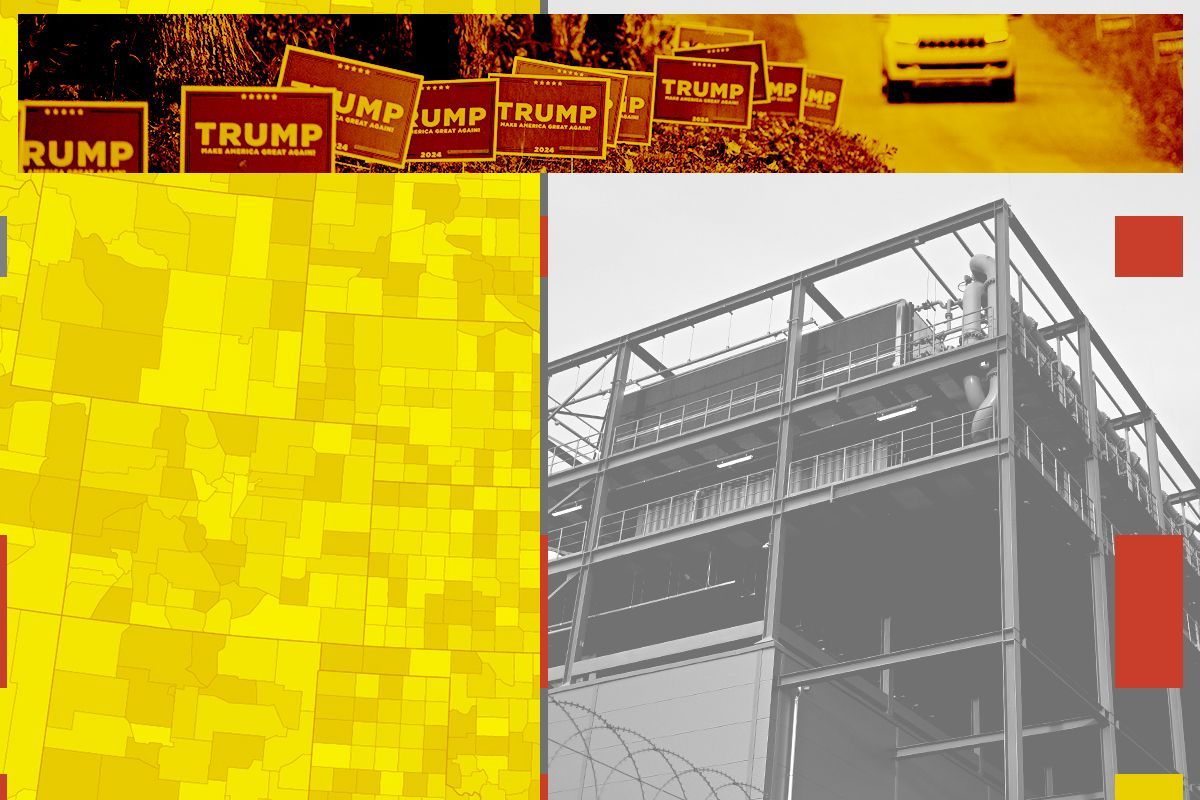
It’s probably an exaggeration to say that there are more alligators than people in Colleton County, South Carolina, but it’s close. A rural swath of the Lowcountry that went for Trump by almost 20%, the “alligator alley” is nearly 10% coastal marshes and wetlands, and is home to one of the largest undeveloped watersheds in the nation. Only 38,600 people — about the population of New York’s Kew Gardens neighborhood — call the county home.
Colleton County could soon have a new landmark, though: South Carolina’s first gigawatt data center project, proposed by Eagle Rock Partners.
That’s if it overcomes mounting local opposition, however. Although the White House has drummed up data centers as the key to beating China in the race for AI dominance, Heatmap Pro data indicate that a backlash is growing from deep within President Donald Trump’s strongholds in rural America.
According to Heatmap Pro data, there are 129 embattled data centers located in Republican-voting areas. The vast majority of these counties are rural; just six occurredin counties with more than 1,000 people per square mile. That’s compared with 93 projects opposed in Democratic areas, which are much more evenly distributed across rural and more urban areas.
Most of this opposition is fairly recent. Six months ago, only 28 data centers proposed in low-density, Trump-friendly countries faced community opposition. In the past six months, that number has jumped by 95 projects. Heatmap’s data “shows there is a split, especially if you look at where data centers have been opposed over the past six months or so,” says Charlie Clynes, a data analyst with Heatmap Pro. “Most of the data centers facing new fights are in Republican places that are relatively sparsely populated, and so you’re seeing more conflict there than in Democratic areas, especially in Democratic areas that are sparsely populated.”
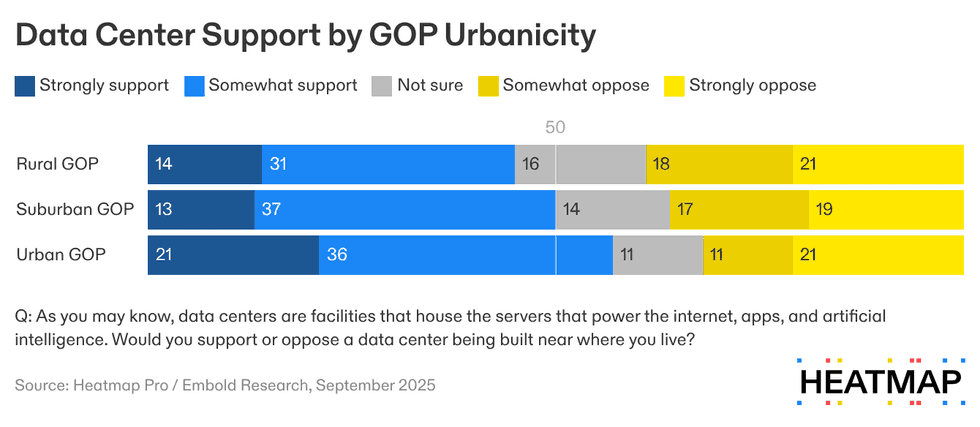
Our polling reflects this: Rural Republicans exhibit greater resistance to hypothetical data center projects in their communities than urban Republicans: only 45% of GOP voters in rural areas support data centers being built nearby, compared with nearly 60% of urban Republicans.
Such a pattern recently played out in Livingston County, Michigan, a farming area that went 61% for President Donald Trump, and “is known for being friendly to businesses.” Like Colleton County, the Michigan county has low population density; last fall, hundreds of the residents of Howell Township attended public meetings to oppose Meta’s proposed 1,000-acre, $1 billion AI training data center in their community. Ultimately, the uprising was successful, and the developer withdrew the Livingston County project.
Across the five case studies I looked at today for The Fight — in addition to Colleton and Livingston Counties, Carson County, Texas; Tucker County, West Virginia; and Columbia County, Georgia, are three other red, rural examples of communities that opposed data centers, albeit without success — opposition tended to be rooted in concerns about water consumption, noise pollution, and environmental degradation. Returning to South Carolina for a moment: One of the two Colleton residents suing the county for its data center-friendly zoning ordinance wrote in a press release that he is doing so because “we cannot allow” a data center “to threaten our star-filled night skies, natural quiet, and enjoyment of landscapes with light, water, and noise pollution.” (In general, our polling has found that people who strongly oppose clean energy are also most likely to oppose data centers.)
Rural Republicans’ recent turn on data centers is significant. Of 222 data centers that have faced or are currently facing opposition, the majority — 55% —are located in red low-population-density areas. Developers take note: Contrary to their sleepy outside appearances, counties like South Carolina’s alligator alley clearly have teeth.