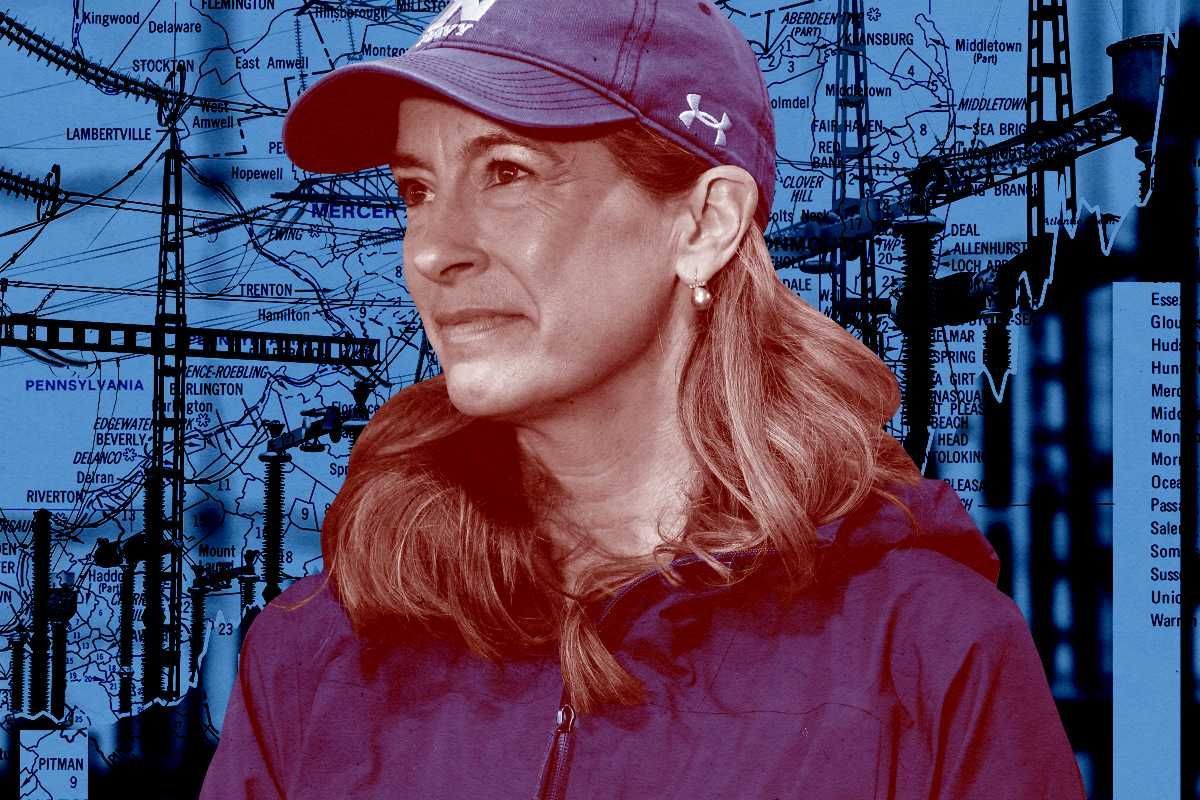
Mikie Sherrill was vulnerable. While New Jersey’s gubernatorial elections tend to favor the party not in control of the White House, no party had won three straight terms in the governor’s mansion at Drumthwacket since the Kennedy administration.
Yet the Democratic congresswoman and former Navy helicopter pilot defeated her Republican rival, former New Jersey State Assemblyman Jack Ciattarelli, on Tuesday night by a comfortable margin of 56% to 43% at press time.
To get there, Sherrill had to overcome not only historical precedent but a potentially devastating kitchen table issue: New Jersey has seen its already high electricity prices rise faster than almost anywhere else in the country, with retail rates going up as much as 20% this summer alone.
It could have proved politically lethal. Heatmap polling has shown that voters blame their state government and electric utility for rising rates more than anyone currently or formerly in power in Washington, D.C. And they are worried about electricity prices — according to CNN exit polling, the top issues among New Jersey voters were taxes and the economy, with about 60% saying that electricity costs were a “major problem where they live.”
Sherrill sought to turn the electricity cost issue from a burden to an advantage by making a clear and simple pledge: that she would declare a state of emergency and freeze utility bills. “On day one, I’m declaring a state of emergency on utility hikes. I’ll freeze those rate hikes to lower your family’s bills… New Jersey, I am not playing. I am not writing a strongly worded letter, I am not starting up a working group, I'm not doing a 10 year study. I am declaring a state of emergency,” Sherrill declared at a pre-election rally.
The results speak for themselves, but they are not entirely unexpected. Sherrill had consistently led in polling against Ciattarelli and even had a 10-point lead on who would handle energy costs better, according to a Fox News poll.
“Mikie Sherrill took the issue of soaring utility bills seriously and centered her campaign around a concise solution to this ongoing crisis. She deserves credit for not shying away from what could have easily been a liability of a campaign issue. From here, what matters is credibly executing on the ambitious goals she laid out in her campaign,” Skanda Amarnath, the executive director of economics think tank Employ America, told me.
Sherrill was also able to use the electricity prices issue to create some space from her predecessor, incumbent governor Phil Murphy. Murphy was associated with a renewables forward strategy, including offshore wind, and had cast some doubt on the effectiveness and practicality of Sherrill’s pledge. “I’m not sure how you’d actually do that,” Murphy told reporters in August.
“Governor Murphy has taken a lot of blame for increased energy prices. He kind of went all in on clean energy. I think she's trying to create distance between herself and an incumbent from her party,” Dan Crawford, senior vice president at Echo Communications Advisors, a communications firm that specializes in climate and clean energy, told me.
Sherrill also embraced nuclear energy on the trail, one of the few non-politically-polarizing energy generation sources left in the United States, saying she would “immediately develop a plan for a new nuclear power site in Salem County.”
Ciattarelli stuck to standard Republican moves on energy, saying he would ban offshore wind and take New Jersey out of the Regional Greenhouse Gas Initiative, the Northeastern cap-and-trade system.
“The price freeze was a very smart move because it was very old in a way. It's very Trumpy,” Crawford said. “I'm going to use an executive order to freeze prices. I'm going to fight for you. I'm going to take the fight to PJM. She's not really worrying as much about the details, but she's calling attention to the issue. I think that did kind of make energy prices a bigger issue in the campaign and put Ciattarelli on the defensive a little bit.”
But now Sherrill will have to deal with the politics and practicalities of actually implementing a price freeze, navigating potential legal challenges, and maintaining the necessary investment levels in the state’s grid in order to meet its decarbonization goals.
“For the first time in a long time, utility bills became a top issue in a gubernatorial election. In New Jersey, both candidates leaned heavily on utility affordability messaging, feeling pressure from voters to demonstrate leadership on this issue,” Charles Hua, the executive director of Powerlines, told me. “Now, it is imperative for Governor Sherrill to deliver on her promise to make utilities affordable — voters will be paying attention.”
Environmental groups hailed Sherrill’s win as a victory for renewables against the regulatory assault launched on them by Donald Trump and as a sign that advocates for renewables could effectively leverage the electricity price issue to their advantage.
“Make no mistake, out of control energy costs were a top tier issue in this year’s election, and in Sherrill, New Jerseyans have elected a governor who knows that renewable energy is cheaper, cleaner, and faster to deploy than dirty, old alternatives, and who has a strong mandate to lead the Garden State forward,” EDF Action president David Klieve said in a statement.
And the electricity price issue will likely flare up in statewide and national races in 2026.
“Electricity price spikes are going on all over the country,” Justin Balik, a vice president at Evergreen Action, told me. “Folks should be taking a close look at how Mikie messaged around these issues.”