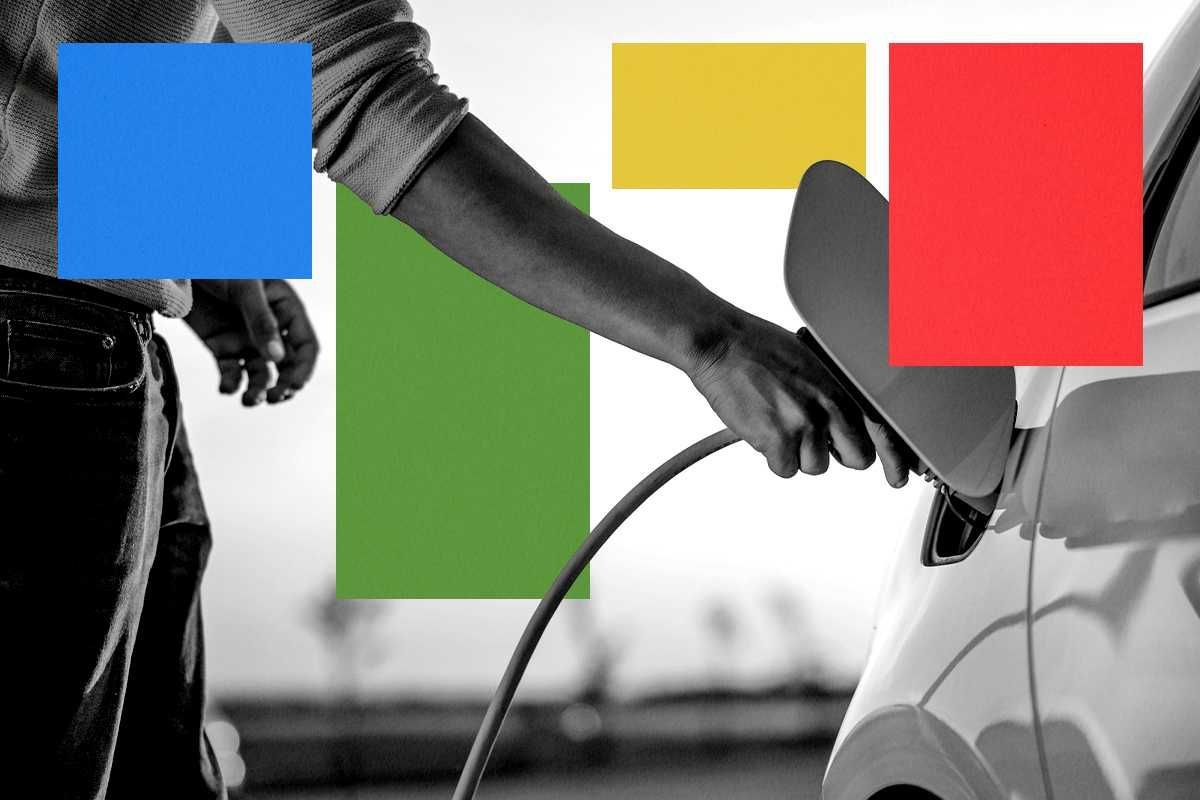
Data centers aren’t the only driver of rising power use. The inexorable shift to electric vehicles — which has been slowed, but not stopped, by Donald Trump’s policies — is also pushing up electricity use across the country. That puts a strain on the grid — but EVs could also be a strength.
On this week’s episode of Shift Key, Rob and Jesse talk to Apoorv Bhargava, the CEO and cofounder of WeaveGrid, a startup that helps people charge their vehicles in a way that’s better and cleaner for the grid. They chat about why EV charging remains way too complicated, why it should be more like paying a cellphone bill than filling up at a gas station, and how the AI boom has already changed the utility sector.
Shift Key is hosted by Robinson Meyer, the founding executive editor of Heatmap, and Jesse Jenkins, a professor of energy systems engineering at Princeton University.
Subscribe to “Shift Key” and find this episode on Apple Podcasts, Spotify, Amazon, YouTube, or wherever you get your podcasts.
You can also add the show’s RSS feed to your podcast app to follow us directly.
Here is an excerpt from our conversation:
Robinson Meyer: In your experience, are consumers willing to make this deal, where they get some money off on their power bill in order to change how their car works? Because it does seem to include a mindset change for people, where they’re going from thinking of their car as a machine — I mean, this is part of the broader transition to EVs. But there’s an even further mindset shift that seems to me like it would be required here, where you go from thinking about your car as a machine that you wholly own — that enables your freedom, that is ready to drive a certain amount of miles at any time — to a machine that enables you to have transportation services but also is one instantiation of the great big cloud of services and digital technologies and commodity energy products that surround us at any time.
Apoorv Bhargava: Yeah, I mean, look, I think we have seen faster adoption rates than any other consumer-side resource participating in energy has. So I feel very good about that. But ultimately, I think of this as a transition to the normal experience for folks who are going through what is a new experience altogether.
Again, similar to my cell phone plan, if this was just offered to me as a standard offering — you buy an EV, your utility offers you a plan, it’s called the EV plan — in the same way that we have EV time-of-use rates, quote-unquote. If you’re just offered an EV plan where it’s exactly the same thing — I’m going to make sure you’re fully charged every night in the way you want it to be charged, with the cleanest, cheapest, most reliable charging possible, and it’s just being taken care of.
I think what’s so hard for most folks to grok, is that the way this experience works is it’s supposed to be completely frictionless, right? You’re really supposed to not think about it. It’s actually only in the few moments where you need to change your 99% behavior to the 1% behavior — where you’re like, Oh, I need to go to the airport, or, Oh, I need to go on a road trip. That’s where you need to think about it. It’s flipped from thermostat management programs where you actually need to think about it actively in the moments where the grid is really strained.
Where we’ve overinvested, in my view —and this is a controversial view — we’ve overinvested in trying to make EVs be like gas stations or like the gas station model. We keep talking about it all the time. We’ve over-talked about range anxiety. The fact of the matter is 80% of charging still happens at home. Even in the long run, 30% of charging will happen in the workplace. 50- plus-percent will happen at home. It’s very little charging that’s gonna happen on fast charging. But we’ve talked so much, ad nauseam, about fast charging that we’ve actually forgotten that underpinning the iceberg of the electrification cost is the grid itself. And never before has the grid been so strained.
Mentioned:
Rob on how electricity got so expensive
Utility of the Future: An MIT Energy Initiative response to an industry in transition, December 2016
Previously on Shift Key: Utility Regulation Really Sucks
Jesse’s downshift; Rob’s upshift.
This episode of Shift Key is sponsored by …
Hydrostor is building the future of energy with Advanced Compressed Air Energy Storage. Delivering clean, reliable power with 500-megawatt facilities sited on 100 acres, Hydrostor’s energy storage projects are transforming the grid and creating thousands of American jobs. Learn more at hydrostor.ca.
Uplight is a clean energy technology company that helps energy providers unlock grid capacity by activating energy customers and their connected devices to generate, shift, and save energy. The Uplight Demand Stack — which integrates energy efficiency, electrification, rates, and flexibility programs — improves grid resilience, reduces costs, and accelerates decarbonization for energy providers and their customers. Learn more at uplight.com/heatmap.
Music for Shift Key is by Adam Kromelow.